Why Sebastian Inlet is world-famous for fishing
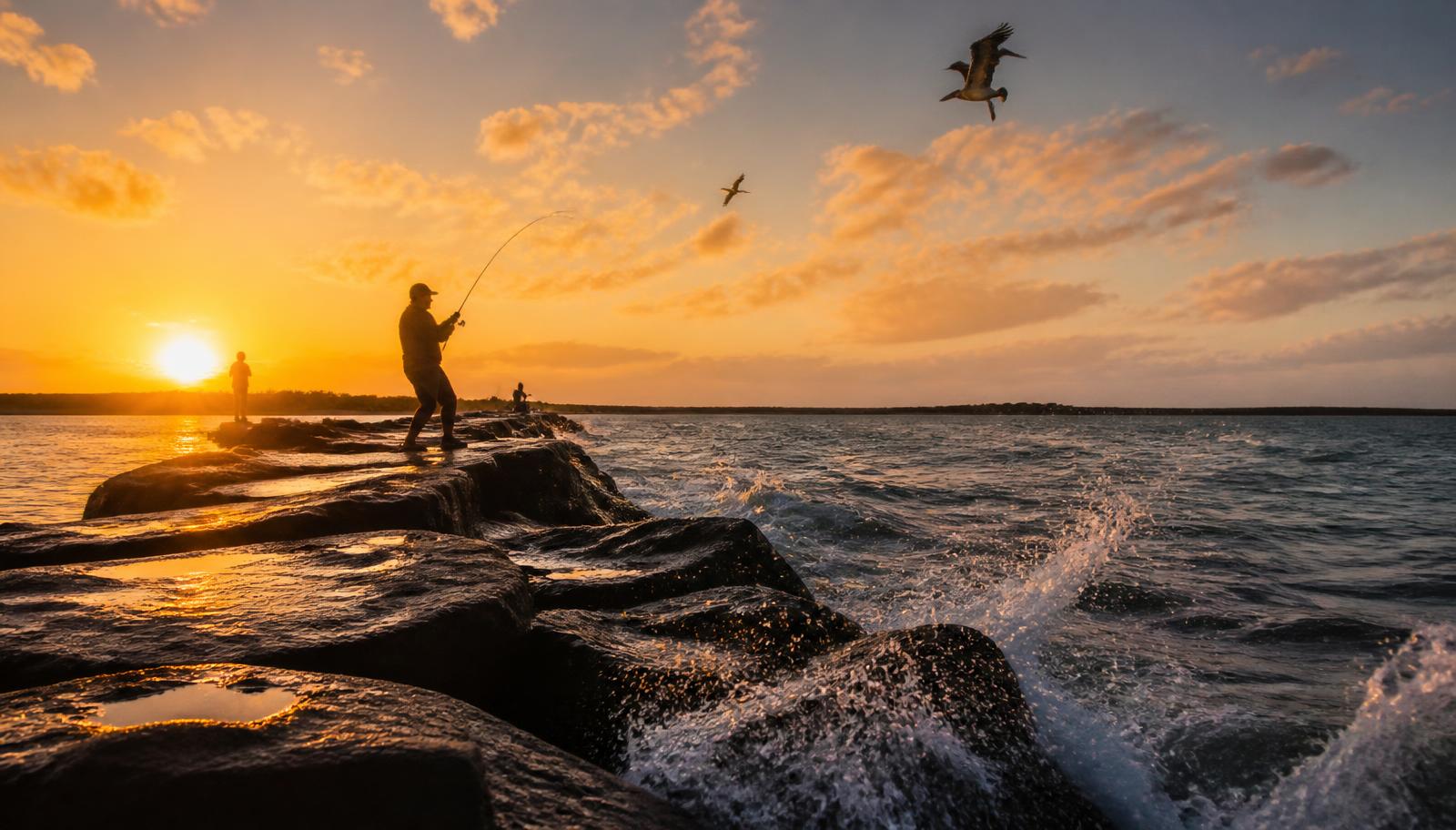
Sebastian Inlet is the only natural cut between the Atlantic Ocean and the Indian River Lagoon for a 60-mile stretch of Florida coast. Every incoming tide funnels ocean baitfish — glass minnows, threadfins, pilchards, mullet — into the lagoon; every outgoing tide flushes them back out. Predators stack in that current 12 hours a day, 365 days a year. That single hydrodynamic accident is why the Inlet is consistently ranked in Florida's top three snook fisheries, why it holds multiple IGFA line-class records, and why Field & Stream, Salt Water Sportsman, and Florida Sportsman have profiled it for decades.
A short history: the Inlet has been cut and closed by hurricanes since the 1800s. It was permanently stabilized with jetties and a bridge in 1948, creating today's north and south jetty structure — the two most productive rock piles for shore-based snook fishing in the state. The state park (Sebastian Inlet State Park) protects both sides, keeping the fishery from being lined with condos.
The eight species you will realistically catch
1. Snook (Common snook — *Centropomus undecimalis*) The reason people fly in. Peak runs: May through September on outgoing tides at the north jetty. Fish 5–20 lb are common, 30-lb linesiders are landed every summer. Live pilchards, threadfins, or a big Rapala X-Rap in bone or chartreuse. Requires a saltwater license plus a $10 snook stamp. Slot 28–32 inches (Atlantic), one per person per day, closed Dec 15–Jan 31 and Jun 1–Aug 31. Catch-and-release only during closed season.
2. Tarpon (*Megalops atlanticus*) The "silver king." May–August around the inlet mouth and along the beach. Fish 60–120 lb on 60-lb braid, 80-lb leader, 7/0–9/0 circle hook, live mullet or threadfin. Catch-and-release only in Florida for any tarpon over 40 inches. Never lift a tarpon out of the water — a $50 tarpon tag is required only if you kill one for an IGFA record.
3. Redfish (Red drum — *Sciaenops ocellatus*) Fall pushes reds onto the north and south grass flats. Sight-fish on shallow winter low tides with gold spoons or weedless soft plastics (paddle tail, DOA CAL). Slot 18–27 inches, one per person, one over-slot tag by permit. Closed seasons rotate; check FWC before keeping any.
4. Spotted sea trout (*Cynoscion nebulosus*) Year-round on grass flats 3–4 ft deep. Live shrimp under a popping cork at dawn beats every artificial on 90% of days. Slot 15–19 inches, one over 19", three per person per day (east region).
5. Spanish mackerel (*Scomberomorus maculatus*) Spring and fall runs (Mar–Apr, Oct–Nov) along the beach and off the jetty. Silver Clark spoon on 30-lb wire behind a #1 planer, or gotcha plugs from the jetty. No slot, 15-fish bag, 12" fork minimum.
6. Bluefish (*Pomatomus saltatrix*) Winter blitzes — Nov–Feb — along the beach. Diamond jigs, spoons, or cut mullet. 12-fish bag, no minimum. Great fight, oily meat — smoke them same day.
7. Sheepshead (*Archosargus probatocephalus*) Peak Jan–Mar around dock pilings, bridge structure, and the jetty. Live fiddler crab or fresh shrimp on a #2 hook. Slot 12", 8-fish bag. Best table fish inshore, hardest to hook.
8. Mangrove snapper, jack crevalle, flounder, pompano Bycatch that becomes the target when the marquee species won't cooperate. Pompano on sand fleas or Doc's Goofy jigs, snapper on live shrimp near structure, flounder on Gulp shrimp on the flats.
Month-by-month calendar
| Month | Primary target | Where | Bait / lure |
|---|---|---|---|
| Jan | Sheepshead, trout, redfish | Docks, north flats | Live shrimp, fiddler crabs |
| Feb | Sheepshead, trout, pompano | Docks, beach | Shrimp, sand fleas |
| Mar | Spanish mackerel, bluefish, trout | Beach, jetty | Silver spoons, gotcha plugs |
| Apr | Snook (opening), tarpon (early), trout | North jetty, flats | Live pilchards, big plugs |
| May | Snook, tarpon, jack crevalle | Inlet mouth, jetty | Live mullet, DOA baitbusters |
| Jun | Tarpon (peak), jacks (closed snook) | Inlet, beach | Live mullet, threadfins |
| Jul | Tarpon, mangrove snapper (closed snook) | Inlet, mangroves | Live mullet, shrimp |
| Aug | Tarpon, mangrove snapper (closed snook) | Inlet, back-country | Live mullet, shrimp |
| Sep | Snook (reopens Sep 1), redfish, snapper | Jetty, flats | Live pilchards, cut ladyfish |
| Oct | Spanish mackerel, redfish, flounder | Beach, jetty, flats | Silver spoons, Gulp shrimp |
| Nov | Bluefish, Spanish mackerel, trout | Beach, jetty | Casting spoons, diamond jigs |
| Dec | Trout, redfish, sheepshead (closed snook Dec 15) | Flats, docks | Live shrimp, fiddler crabs |
Licensing: exactly what you need before you cast
Florida saltwater licenses are issued by the Florida Fish and Wildlife Conservation Commission (FWC) at MyFWC.com or the free Fish|Hunt FL app.
| License / stamp | Non-resident | Resident | Required for |
|---|---|---|---|
| 3-day saltwater | $17 | — | Any saltwater fishing incl. jetty, dock, beach |
| 7-day saltwater | $30 | — | Same, week-long trip |
| Annual saltwater | $47 | $17 | Same, one calendar year |
| Snook stamp | $10 | $10 | Anyone possessing snook, on top of saltwater |
| Lobster stamp | $5 | $5 | Only if you dive/pull lobster in season |
| Shoreline (no boat) | free | — | Florida residents fishing from shore only |
Exemptions: under 16, over 65 (Florida residents with proof), active-duty military on leave, and anglers fishing from a licensed pier. The private-property exemption does NOT apply on tidal waterways — our dock is tidal, so you need a saltwater license to fish from it.
Buy the license before you leave the house on day one. Wardens check at the jetty, ramps, and along the beach; a citation runs $50–$500 plus points on any future license.
Tournament calendar
Sebastian and the surrounding coast host a busy tournament year. Dates below are historical windows — always confirm current dates with organizers.
| Event | Typical dates | Species / format | Where |
|---|---|---|---|
| Pelican Yacht Club Billfish Invitational | Jan | Sailfish (release) | Fort Pierce Inlet (30 mi south) |
| Treasure Coast Sailfish Championship | Jan–Mar series | Sailfish release | Stuart / Fort Pierce |
| Sebastian Inlet Charity Fishing Tournament | Mar | Inshore slam (snook / red / trout) | Sebastian Inlet |
| Native Rods Charity Tournament | Apr | Inshore, catch-photo-release | Sebastian to Vero |
| Melbourne Tarpon Tournament | May–Jun | Tarpon release | Sebastian Inlet / Indian River |
| Grant Seafood Festival Kids Fishing Derby | Feb (fest weekend) | Youth panfish/pinfish | Grant |
| CCA Florida STAR Tournament | May–Sep (statewide) | Tagged redfish + released species | Statewide, redeem at Sebastian |
| Freedom Boat Club Snook Shootout | Sep | Snook release (opening month) | Sebastian Inlet |
Guests targeting a tournament weekend should book 6–9 months ahead — captains and lodging both fill fast.
How to fish each spot (the how-to)
The north jetty (the famous one) Walk it from the state park on the Brevard side. Fish an outgoing tide 2 hours before to 1 hour after slack, first light or last light. Live pilchard or a 7-inch Rapala on 30-lb braid, 50-lb leader. Cast into the current and let it swing under the rocks. Wear rock-gripping shoes (Korkers or felt-soled), not sneakers — the algae is aggressive.
The south jetty Indian River County side, quieter, better for families. Same rig, same tides. Fewer trophy snook, more consistent bluefish and Spanish in shoulder seasons.
The beach (surf fishing) Sebastian State Park beach, north of the Inlet. Two-hook pompano rig, 3–4 oz pyramid sinker, sand fleas or Fishbites EZ Flea. Best two hours of incoming tide. In fall you'll add whiting, croaker, and small sharks.
From a kayak (back-country flats) Launch at Christenson's Landing (3 min from the house) at first light. Paddle 500 yards south to the grass edge. Popping cork + live shrimp for trout, gold spoon or paddletail for reds. Dawn and dusk only in summer — midday sun and lightning make it dangerous.
From a small boat Long Point Park ramp puts you inside the Inlet in about 10 minutes. Anchor upcurrent of the bridge fenders on an outgoing tide, chum with live pilchards, free-line one back. That's how the guides catch numbers of snook.
From our dock Sea trout, snook, jack, mangrove snapper, and winter sheepshead all come right to the pilings. Live shrimp under a popping cork wins 70% of the time. First light and last light are prime. Rods, tackle box, cast net, and cleaning table are provided; buy live shrimp at Whitey's on the way in.
Where to buy bait and get honest reports
- · Whitey's Bait & Tackle — Micco, 6 mi south. Live shrimp, chum, tackle, ice, and the most honest whiteboard on the coast. Ask what's biting before you buy bait.
- · Sebastian Inlet Marina Store — inside the park, live and frozen bait, only fuel dock inside the Inlet.
- · Bass Pro Shops Palm Bay — 25 min north, best selection of jigs and terminal tackle.
Charters worth booking
If you don't own a boat, hire one. A good local captain will out-produce a week of DIY guessing. Ballpark rates are for 2026; confirm at booking.
- · Sebastian Inlet inshore guides — half-day (4 hrs, up to 4 anglers) $450–$550, full-day $750–$900. Snook, redfish, trout, tarpon in season.
- · Beach / near-shore — $600 half-day. Spanish mackerel, kingfish, cobia.
- · Offshore (deep drop / mahi / sailfish) — $1,400+ full-day, launch out of Fort Pierce Inlet.
- · Family / beginner trips — same guides, slower pace, extra patience with kids. Ask specifically.
All reputable charters include rods, tackle, ice, bait, and the captain's license (you do not need your own license aboard a licensed vessel).
Safety — the part locals actually pay attention to
1. Weather. Afternoon thunderstorms are daily May–September. Off the water by 2pm in summer. The NOAA Melbourne radar (KMLB) is your friend; the free Windy app is better than any TV forecast for the Inlet. 2. Lightning. Florida is the U.S. lightning capital. If you can hear thunder you can be struck. Get off the jetty and off the water immediately — no fish is worth it. 3. Rip currents. The Inlet mouth generates powerful rips on outgoing tides. If you fall from the rocks, do not fight it — swim parallel to the beach until you're out of the current, then back in. 4. Slick rocks. The jetty algae is a broken-hip waiting to happen. Wear rock-gripping shoes and don't run. 5. Sharks. Bull, blacktip, and lemon sharks patrol the Inlet daily. Don't wade above the knees at the Inlet mouth in summer, don't string fish on a stringer at your waist, and never bleed a fish in the water when a shark is nearby. 6. Sun. UV index hits 11 by 10am, April–October. Long-sleeve UPF shirt, buff, wide-brim hat, reef-safe zinc. Sunglasses with polarized lenses (Costa, Bajio, or Maui Jim) — you'll see fish and protect your eyes. 7. Tides. The Inlet current is fast. Do NOT anchor a small boat in the Inlet mouth. Fish on the drift or from the flats. 8. VHF radio. Any boat over 16 ft should carry a handheld VHF (Ch 16). Cell service drops offshore. 9. Life jackets. Kids under 6 must wear one on a boat under 26 ft (Florida law). We have kids' PFDs at the house. 10. Barbless or crushed-barb hooks for tarpon and released snook — the fish releases cleaner and your hand does too when things go wrong.
Rules cheat sheet (2026)
Rules change. Always confirm at MyFWC.com before you keep a fish. Below is current as of the writing of this post.
| Species | Slot | Bag | Season closed (Atlantic) |
|---|---|---|---|
| Snook | 28–32" | 1 | Dec 15–Jan 31, Jun 1–Aug 31 |
| Redfish | 18–27" | 1 (east region) | — |
| Sea trout | 15–19" (1 over) | 3 | — |
| Tarpon | Release only >40" | 0 (tag req to kill) | — |
| Spanish mackerel | 12" fork | 15 | — |
| Sheepshead | 12" | 8 | — |
| Bluefish | none | 12 | — |
| Mangrove snapper | 10" | 5 | — |
| Pompano | 11" fork | 6 | — |
| Flounder | 14" | 5 | Oct 15–Nov 30 |
From our dock and beyond
Sunrise on the River sits on the west bank of the Indian River, three miles from Sebastian Inlet by water and ten minutes by car. Guests fish the dock at dawn, launch kayaks by 7am for a flats session, come back for lunch, and hit the jetty on the evening outgoing tide — a full Florida fishing day without ever driving more than ten minutes.
If fishing is why you're coming, book a monthly stay in May, June, or September. That's when the Inlet is at its best, and our monthly rate makes it affordable enough to fish 25 tides in a single trip.
Keep planning: the waterfront house on the Indian River · our dock, kayaks and the boat run to the inlet · Sebastian Clambake Festival & Fishing Museum · area fishing directory: charters, ramps and bait shops · the 12 best fishing spots at Sebastian Inlet · Sebastian Inlet State Park camping · photo gallery · guest reviews · ask us about a fishing week.
More from the river: Sebastian Inlet State Park guide · the spoil islands and VIP Island
Boat and kayak launches near the house
Tap a launch to move the map. Drive times are from Sunrise on the River in Grant-Valkaria.
US-1 at Grant, Grant-Valkaria — Closest launch to the house. One concrete lane, boarding dock, straight into the lagoon with no bridges to Sebastian Inlet.
- Drive to Grant Boat Ramp at that hour: 4 min each way (15 min to unload and rig).
- On the water about 7:19 am, back home around 9:23 am.
- Total trip: 2.4 hours.
- Best departure for flat water and light traffic: 6:00 am — the lagoon is usually glass until about 10am.
| Launch | Drive | Fee | Route |
|---|---|---|---|
| 3 min · 1.2 mi | Free | Directions | |
| 5 min · 2.0 mi | Free | Directions | |
| 6 min · 2.0 mi | Free | Directions | |
| 18 min · 11 mi | Free | Directions | |
| 22 min · 14 mi | Free | Directions | |
| 22 min · 14 mi | $4–$5 per vehicle | Directions | |
| 20 min · 12 mi | $8 per vehicle | Directions | |
| 25 min · 17 mi | Free | Directions |
Three ways to stay and paddle
Kayaks are included with every stay at Sunrise on the River, launched from our own dock on the Indian River Lagoon — no rental counter, no trailer, no drive.
Sunrise Paddle Weekend
- · Kayaks included — launch straight off the private dock
- · Paddleboard-flat water from first light to about 10am
- · Fire pit and gazebo for the evening
Lagoon & Spoil Islands Week
- · Kayaks all week, no rental fees
- · Paddle the spoil islands and the Sebastian sandbar
- · Boat ramps under 2 miles for your own trailer
Snowbird Paddle Month
- · Kayaks, dock and screened porch for the whole stay
- · Manatee season on Turkey Creek and the St. Sebastian River
- · Two dogs welcome — $100 per dog per stay
Cleaning $150, dogs $100 each per stay, no resort fees. Check live availability.
Frequently asked
Do I need a fishing license to fish from your dock?
Yes — anyone 16 or older needs a Florida saltwater license to fish from our dock. The private-property exemption does NOT apply to tidal waterways, and the Indian River is tidal. Buy a 3-day non-resident license for $17 at MyFWC.com.
When is snook season closed on the Atlantic coast?
Snook season on the Atlantic (that's us) is closed Dec 15–Jan 31 and Jun 1–Aug 31. You can still catch and release out of season, but you cannot possess a snook. During open season the slot is 28–32 inches, one per person per day, and you need a $10 snook stamp on top of the saltwater license.
Can I clean fish at the house?
Yes — we have a fish-cleaning table at the dock, a hose, and a covered trash can. Rinse thoroughly and bag the carcasses; raccoons and possums will find them otherwise. Please do not clean fish in the kitchen sink.
Do you provide rods and tackle?
Yes — we stock 4 spinning combos (medium and medium-heavy), a small tackle box with popping corks, jigheads, spoons, and hooks, a cast net for baitfish, and a landing net. Bring your own live bait (Whitey's is on the way in) and any specialty tackle. We do not provide licenses — buy yours online before you fish.
Is there a fishing charter you recommend?
We keep a rotating list of 3–4 vetted captains based on guest feedback. Message us before your stay and we'll match you with one that fits your budget, species goal, and group size (family with kids vs serious tarpon hunters need different guides).
What's the biggest fish caught from your dock?
A 34-inch snook in August 2024 on a live pilchard at dawn (released — over slot). A 24-lb jack crevalle came off the same piling a week later. Most days it's trout, mangrove snapper, and sheepshead in the 12–18-inch range — plenty for dinner.
Are there tournaments non-locals can enter?
Yes — the Sebastian Inlet Charity Fishing Tournament (March), the CCA Florida STAR (statewide, May–Sep), and several catch-photo-release inshore tournaments are open to visiting anglers with valid FL licenses. Registration is online 60–90 days in advance.
The river, once a month
Fishing report, rocket launch dates, sandbar and manatee season, local events — plus the open dates we'd love to fill. One email a month, no spam.
One email a month. Unsubscribe any time — we never share your address.